Two voices. One question. Read them together, then follow the thread between them.
Choose a voice, or read both perspectives together.
The voices
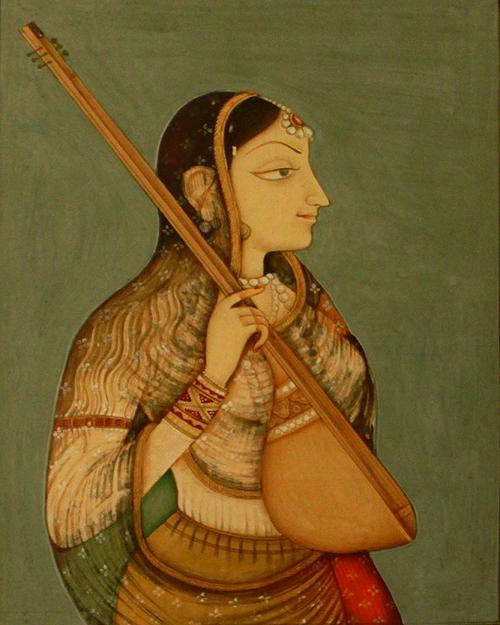
Mirabai
मेरे तो गिरधर गोपाल
An allegiance that changes social claims
The Mirabai pad names Giridhar Gopal as its speaker’s beloved and sets that allegiance beside family standing and public shame. Devotion changes which claims the speaker will obey. The song is not simply a modern declaration of personal freedom: its refusal grows from a particular religious attachment.
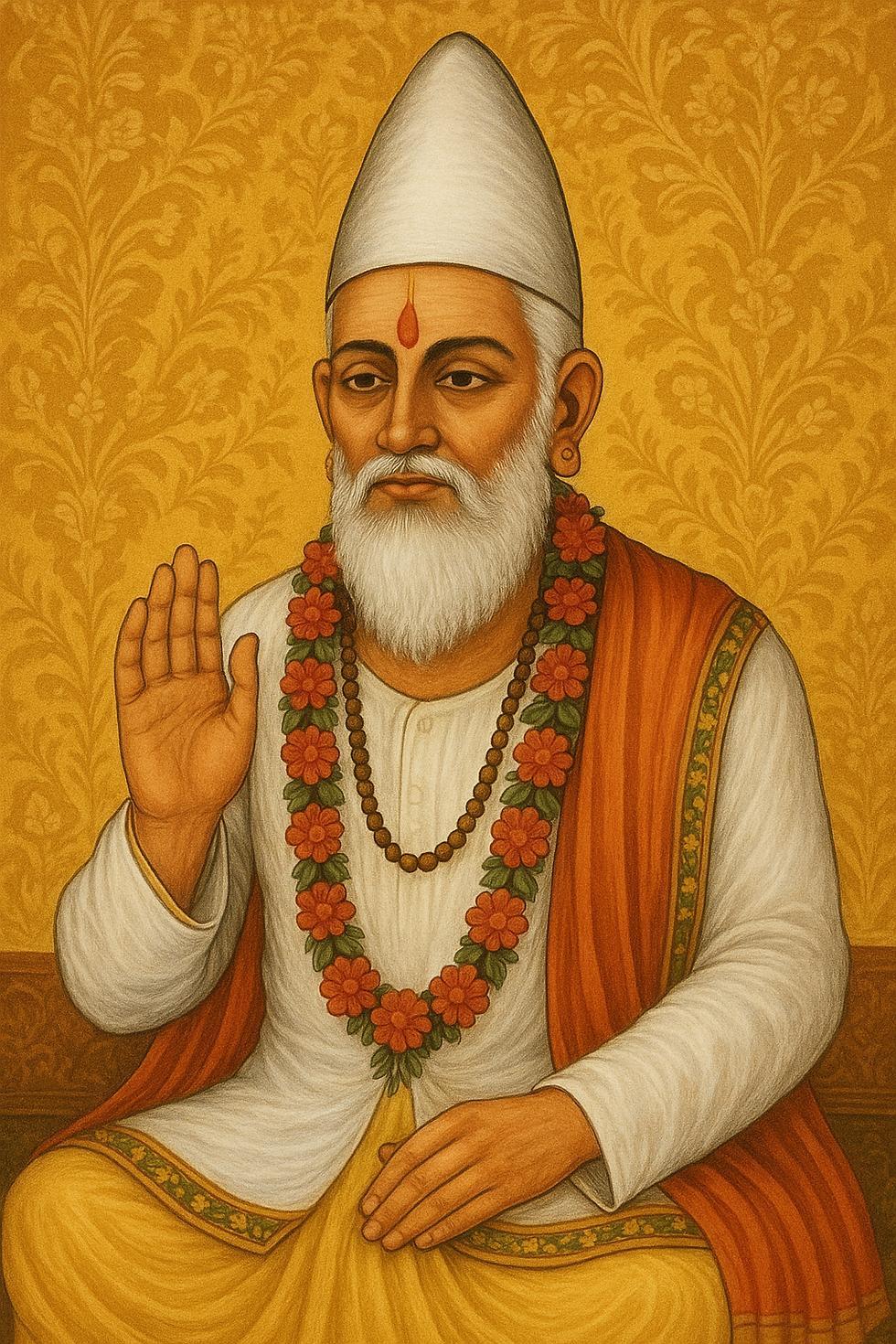
The first song in Tagore’s Kabir selection questions a search confined to named sacred places or practices. Its direct address brings seeking close to the seeker. We are reading a specific English translation, not treating that version as the unmediated voice of every Kabir tradition.
Mirabai pad · Anjas transcription; source listed as Mira Muktavali, edited by Narottamdas Swami, Rajasthani Granthagar
A thread to follow
Read the pad at Anjas and its listed edition reference. Notice how Krishna, family standing and public approval enter the address. Do not treat the song as a literal record of every event in Mirabai’s life.
1915 · English translation by Rabindranath Tagore · original incipit printed as mo ko kahan dhunro bande; Project Gutenberg
A thread to follow
Read poem I in Tagore’s 1915 selection, rather than the volume’s historical introduction. Which places and practices does the song name? Distinguish this English version from the traditions it translates.
A shared question can hold more than one reading. Follow a meeting point, a difference, or the Studio’s interpretation.
Where they meet
The first two songs disturb the authority of an outward arrangement. Social approval does not settle the truth of the Mirabai speaker’s commitment, and a recognised place of worship does not settle the search voiced in Kabir’s song. This is a limited thematic meeting, rather than proof of one shared doctrine. Both let us ask whether a practice that looks correct from outside can fail to answer what gives it meaning.
How can a shared practice remain open to the question that first gave it life?
Where they differ
Mirabai’s address centres on a named beloved, Krishna. The Kabir song questions the attempt to locate the divine within particular sites and observances. Their gestures should not be collapsed into a single claim that all traditions secretly mean the same thing. Nor is questioning an outward form necessarily a rejection of religion. These songs make their challenges through devotional commitments whose vocabularies and histories remain distinct.
Another way to see this
Calling every devotional speaker a rebel can become another way of deciding who the speaker is allowed to be. Devotion can sustain a community as well as unsettle one, and refusal alone is not evidence of wisdom. The songs also reach us through performance, collection and translation. This selection cannot settle every question of attribution, variant wording or the practices of living communities. The comparison concerns these identified versions, not a final account of either tradition.
Flute & Forge’s perspective
A commitment may change whose approval we need.
Perhaps a practice becomes demanding when it asks us to examine the authority we have given to appearances. Our proposal is not to replace every shared custom with private certainty. It is to notice the point at which belonging to a form no longer guarantees attention to what that form is meant to serve. Reading these songs together can make that question vivid while leaving us free to disagree about the answer. We need not accept their religious premises in order to listen carefully; we should not remove those premises merely to make the works resemble our own outlook.
Another way to see this
Calling every devotional speaker a rebel can become another way of deciding who the speaker is allowed to be. Devotion can sustain a community as well as unsettle one, and refusal alone is not evidence of wisdom. The songs also reach us through performance, collection and translation. This selection cannot settle every question of attribution, variant wording or the practices of living communities. The comparison concerns these identified versions, not a final account of either tradition.
The question that remains
How can a shared practice remain open to the question that first gave it life?
A thematic comparison, not a claim of historical influence or a psychological finding.
What do you notice?
Your reading can remain a question. Choose a possibility, write a thought, or continue directly to the Studio’s perspective.
Your words stay in this tab for this visit. They are not submitted or included in a shared link.
A new voice at the table
What if devotion brought us back into the world?
Tagore shifts the question from where a seeker looks to the ordinary work beside which a religious encounter might be imagined.
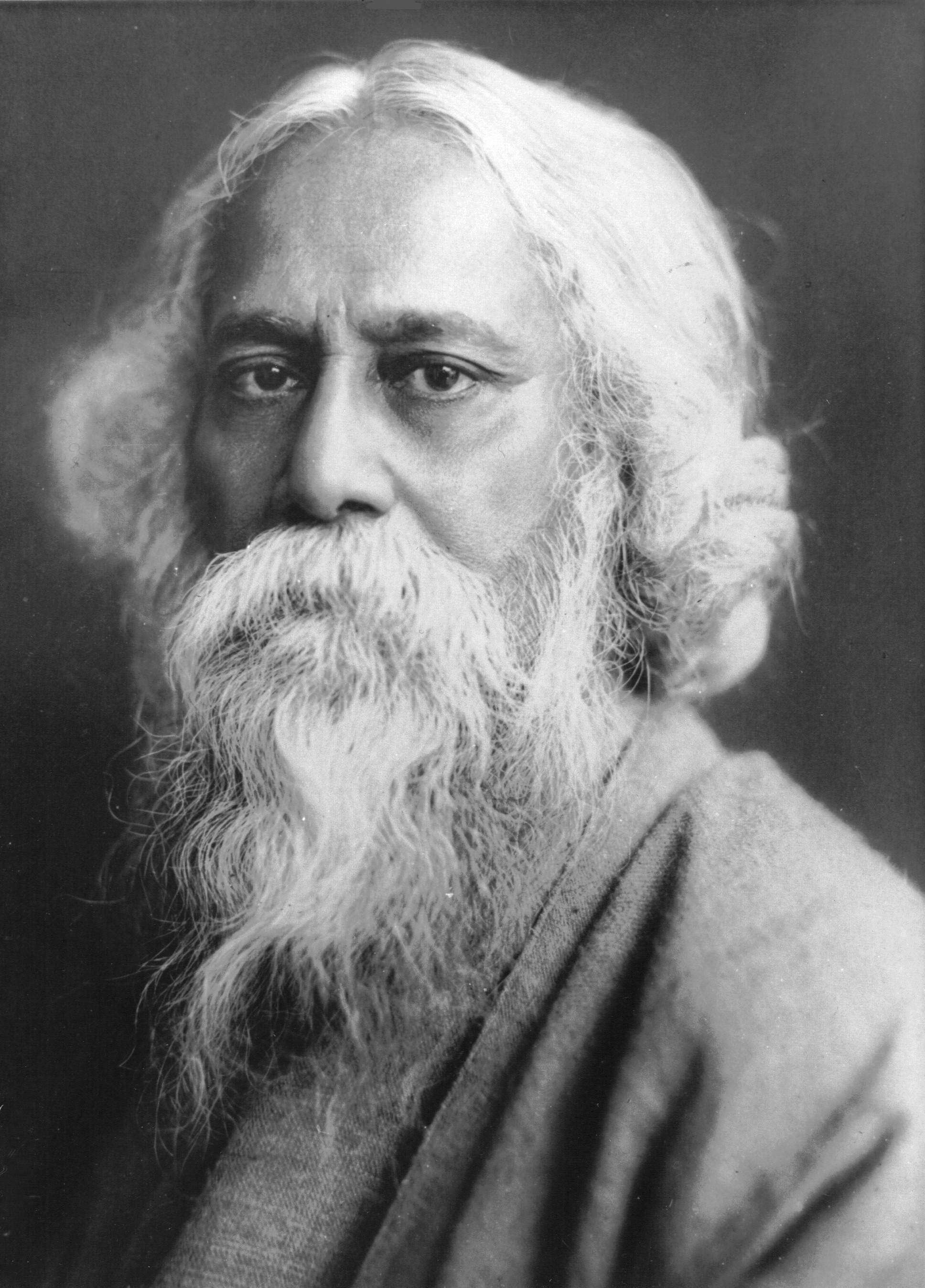
Rabindranath Tagore
Gitanjali · poem 11
English prose version made by Tagore from Bengali · poem 11 · Project Gutenberg; commentary uses this English edition
In Gitanjali 11, Tagore’s English prose poem turns worship toward the tiller and the person breaking stones. Work becomes a place of encounter with the divine. Its religious language matters: the poem is more than a general recommendation to be useful or busy.
With Tagore, questioning convention need not lead to a retreat from shared life. Our revised proposal asks how a commitment might change the way we meet the people already around us. That is an editorial possibility between the works, not a claim that work is always liberating or that hardship becomes sacred by being endured. The labouring person must remain a person with needs and choices, rather than a beautiful illustration of someone else’s devotion. Perhaps the test of an inward commitment also includes what it allows us to notice outside ourselves.
What changes when devotion must answer to the people beside us?
Keep the question open
Follow these voices into their profiles and selected readings. A different work may complicate the connection again.