
Oscar Wilde
Beauty · Freedom
Oscar Wilde
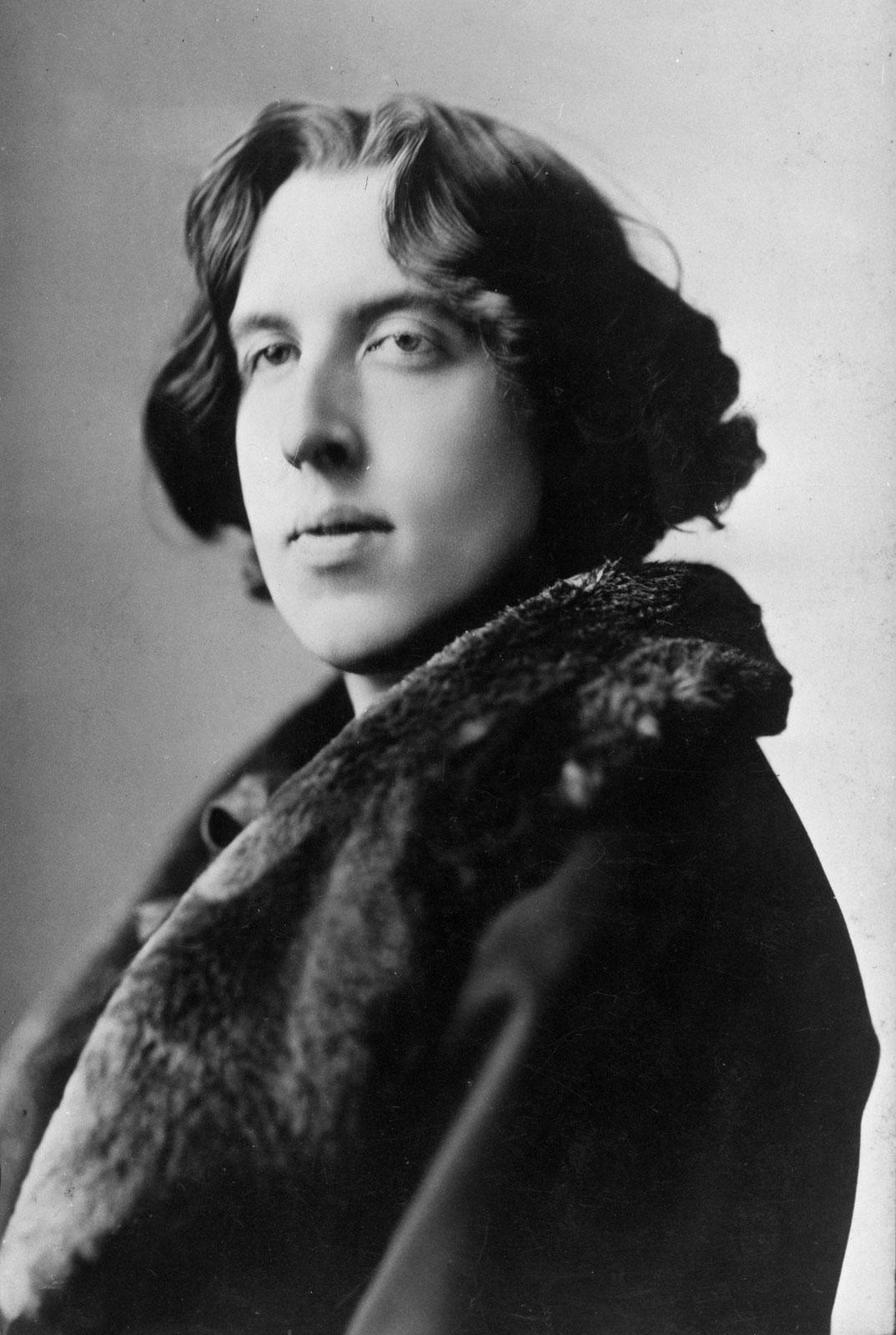
A playwright and essayist whose wit makes beauty and moral certainty less comfortable companions.
1854–1900 · Irish playwright, poet, novelist, and essayist
Their literary world
Oscar Wilde brought wit and paradox to questions of art, morality, and human experience. His plays, fiction, poetry, and essays expose social hypocrisy and the assumptions through which people judge beauty, identity, and desire.
His work explores the gap between appearance and private reality, and the danger of mistaking beauty for moral worth. De Profundis reveals another register: a prison letter shaped by suffering, reflection, love, and responsibility. Wilde moves between comic intelligence and seriousness without treating either as a contradiction.
Featured reading · Flute & Forge reading companion
Symphony in Yellow
Read Wilde’s complete poem, then return to its shifting palette: the omnibus, river, fog and leaves turn a city scene into a visual composition.
Wilde composes the city through colour and motion: a bus becomes a butterfly, fog a scarf, the river a polished stone. The poem’s yellow gradually gives way to green, so the scene is not a static picture but a sequence of shifting perceptions. Read it aloud for its music as well as its images.
The companion is editorial; the linked Wikisource page gives Wilde’s poem.
Read the complete poem at WikisourceA passage
“Where there is sorrow there is holy ground.”De Profundis · written 1897
A way into the passage
Wilde asks the reader to approach suffering with seriousness and compassion. The line does not make pain desirable or inherently ennobling; it insists that sorrow deserves attention rather than dismissal.
Essential works
Novel · 1890–1891
The Picture of Dorian Gray
A novel about beauty, vanity, morality, and the consequences of separating outward appearance from character.
Prison letter · written 1897
De Profundis
A long letter reflecting on love, betrayal, suffering, and self-understanding.
Comedy · 1895
The Importance of Being Earnest
A comedy of social convention, identity, marriage, and the absurdities of respectability.
A question worth exploring
Can the pursuit of beauty deepen our understanding of life, or become a way to escape reality?
We are all in the gutter, but some of us are looking at the stars.Project Gutenberg
A question to carry with you
Can wit open a question that solemnity has closed?
An editorial introduction by Flute & Forge Studio.