

Amrita Pritam
Longing · Freedom
Amrita Pritam
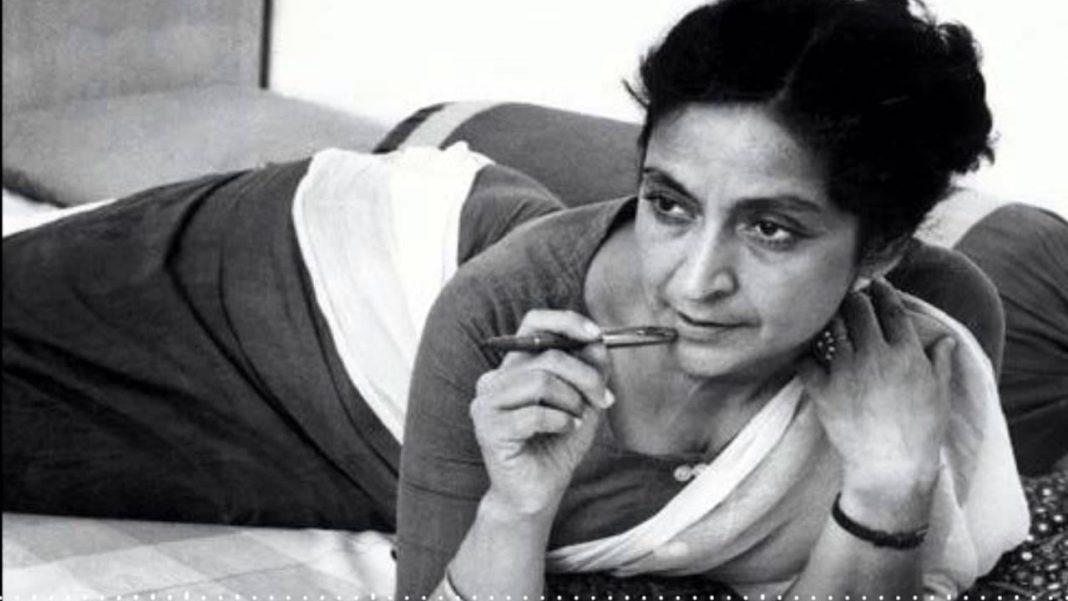
A Punjabi poet and novelist approached through longing, memory and a voice willing to resist convention.
1919–2005 · Punjabi poet, novelist, and essayist · Sahitya Akademi Award recipient
Their literary world
Amrita Pritam was a major voice in modern Punjabi literature. Her writing explores love, personal freedom, womanhood, separation, and the emotional consequences of historical violence. Partition profoundly shaped her imagination, allowing private grief to speak to a community’s divided history.
Pritam also wrote directly about desire and emotional independence, challenging social expectations placed on women. Her voice moves between intimate longing and collective mourning. In Ajj Aakhaan Waris Shah Nu, she calls on the earlier Punjabi poet whose Heer-Ranjha tale gave a lasting form to love, turning that inheritance towards Partition’s suffering.
Featured reading · Flute & Forge reading companion
Ajj Aakhaan Waris Shah Nu
Read Pritam’s Punjabi poem and its transliteration at the linked source. This companion attends to its address to Waris Shah amid the violence of Partition.
Pritam addresses Waris Shah as a witness capable of hearing a people’s grief. The poem’s personal voice opens outward into a historical lament, making the act of calling a poet part of the poem’s moral urgency. Read the Punjabi source at Folk Punjab and let the original language remain audible.
The companion is editorial; the linked page presents the Punjabi source text.
Read the poem at Folk PunjabA passage
“Today I call upon Waris Shah to speak from his grave.”Ajj Aakhaan Waris Shah Nu · opening line, original editorial translation
A way into the passage
Pritam addresses the eighteenth-century poet Waris Shah, invoking the tradition of Heer and Ranjha to confront the violence and grief of Partition. The poem turns personal poetic longing into a collective appeal for compassion.
Essential works
Poem · 1947
Ajj Aakhaan Waris Shah Nu
A lament for Punjab during Partition that invokes the literary memory of the Heer-Ranjha romance.
Poem
Main Tenu Phir Milangi
A poem imagining love and recognition persisting beyond ordinary forms of separation.
Novel · 1950
Pinjar
A novel about Partition, identity, violence, and women’s lives caught in historical upheaval.
A question worth exploring
Can love remain a form of resistance when the world is divided by fear, violence, and hatred?
A question to carry with you
How does a voice carry affection across absence?
An editorial introduction by Flute & Forge Studio.