
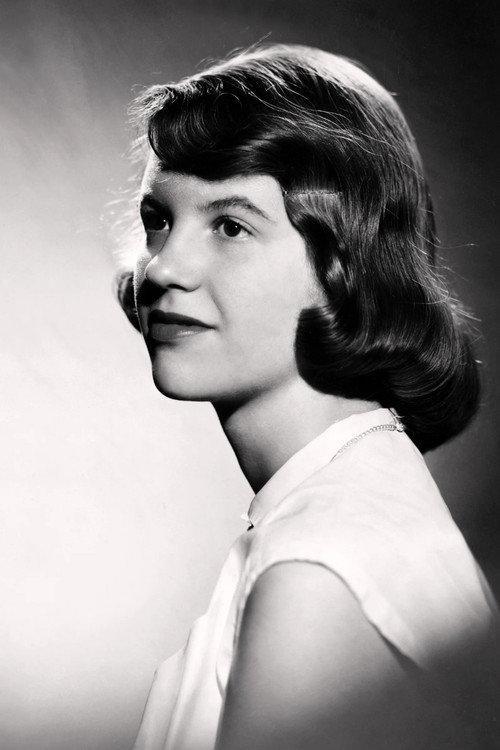
Sylvia Plath
Longing · Consciousness
Sylvia Plath
Poetry that gives an unsettling precision to longing, identity and the inner life.
1932–1963 · American poet and novelist
Their literary world
Sylvia Plath brought unusual intensity and precision to inner experience. Her writing explores identity, longing, relationships, social expectations, and the uncertain border between perception and imagination.
Her poetry often moves between tenderness and disturbance, beauty and disillusionment. Ordinary objects become psychological landscapes, while familiar emotions acquire unexpected intensity.
Her importance lies not simply in the suffering associated with her life, but in her remarkable command of language, metaphor, rhythm, and poetic form. Her work asks how imagination shapes our experience of love, ourselves, and the world.
Featured reading · Read the published work
Mad Girl’s Love Song
Read Plath’s complete villanelle at the linked source. Its repeating questions make love, memory and perception feel beautifully uncertain.
The linked transcription notes that it has not yet been checked against a primary edition.
Read the poem at LiederNetA passage
“I shut my eyes and all the world drops dead;”Mad Girl’s Love Song · 1953
A way into the passage
The opening sets inner experience against external reality. As the poem turns through memory, longing, and imagined possibilities, it becomes difficult to separate what the speaker desires from what she believes has happened.
Essential works
Villanelle · 1953
Mad Girl’s Love Song
A tightly patterned poem where longing, memory, and imagination unsettle the speaker’s sense of what is real.
Poem · 1961
Mirror
An exploration of self-image and time, shaped through the unsettling voice of a mirror.
Poem · 1962
Lady Lazarus
A dramatic, staged voice examines suffering, survival, spectacle, and the struggle to reclaim agency.
A question worth exploring
Do we fall in love with another person, or sometimes with the world our imagination builds around them?
A question to carry with you
Can a feeling be true even when its story is uncertain?
An editorial introduction by Flute & Forge Studio.