
Virginia Woolf
Consciousness · Love
Virginia Woolf
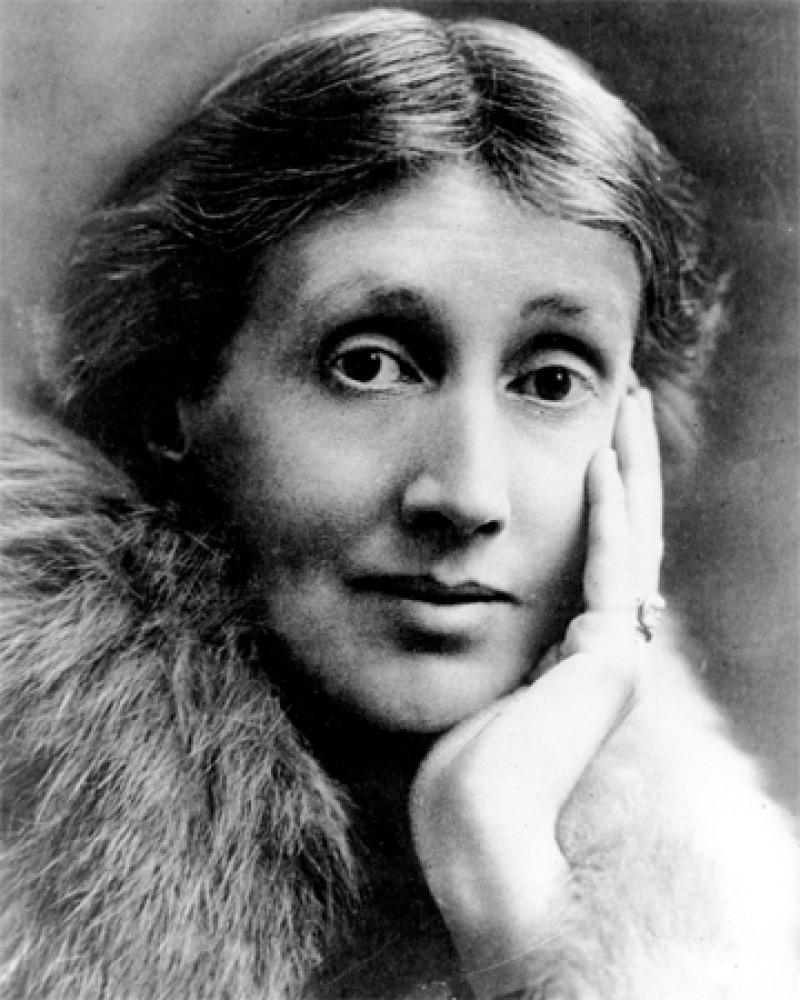
A novelist through whom ordinary moments open into many overlapping inner worlds.
1882–1941 · British novelist, essayist, and modernist
Their literary world
Virginia Woolf transformed the modern novel by turning sustained attention towards the movement of consciousness. Rather than defining people only by what they do, she follows memories, perceptions, and unspoken emotions as they pass through everyday experience.
In her fiction, a passing thought, a familiar street, or an ordinary conversation can open onto an entire interior world. The present is continually touched by memory, anticipation, and feeling; time is experienced as something intimate and shifting, not simply as a sequence of events.
Woolf’s experiments with point of view and form make private experience vivid while leaving room for what one person cannot know about another. Her writing asks how we meet across that distance, and what love, attention, and perception can reveal—or leave unseen.
Featured reading · Read the published work
A Haunted House
Read Woolf’s complete short story from Monday or Tuesday (1921), in which a house’s living and departed inhabitants share a search for a hidden treasure.
The link opens the digitized 1921 collection; this page links to the text rather than reproducing it.
Read the complete story at Project GutenbergA passage
“I am rooted, but I flow.”The Waves · 1931
A way into the passage
The line holds continuity and change together. The voice feels anchored, yet consciousness keeps moving; identity can have a sense of persistence while still being altered by experience.
Essential works
Novel · 1931
The Waves
Six interwoven voices trace friendship, memory, and change across a lifetime in one of Woolf’s most formally experimental novels.
Novel · 1925
Mrs Dalloway
Across a single day in London, remembered experience and present perception bring private lives into unexpected relation.
Novel · 1927
To the Lighthouse
Family life, artistic perception, and the passage of time shape this novel’s changing view of love and loss.
A question worth exploring
How much of another person can we truly know, and how much remains beyond our perception?
A question to carry with you
How much of another life can we ever enter?
An editorial introduction by Flute & Forge Studio.