

Kahlil Gibran
Love · Freedom
Kahlil Gibran
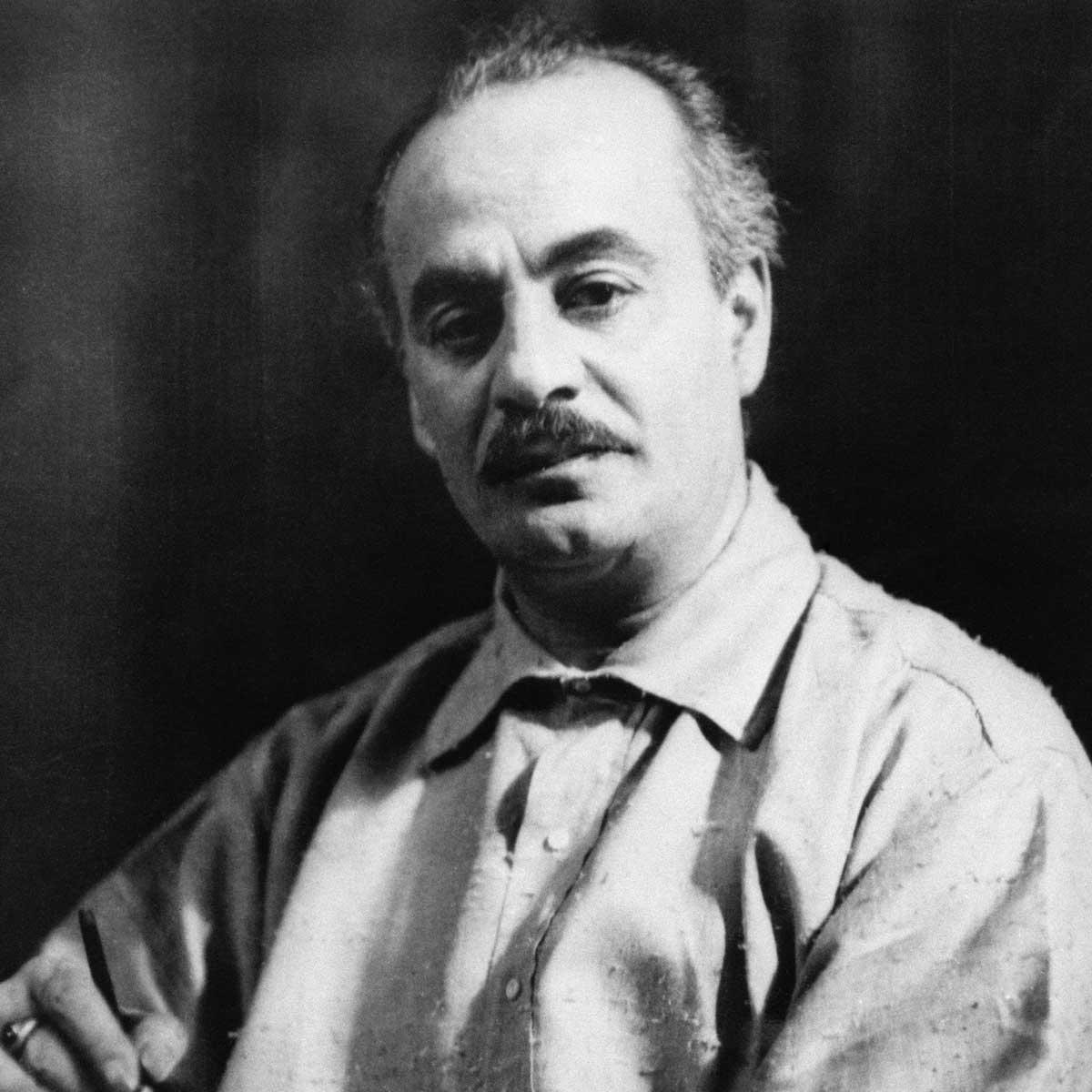
A poet and artist whose prose asks how love can hold both closeness and space.
1883–1931 · Lebanese American writer, poet, and visual artist
Their literary world
Khalil Gibran brought poetry, philosophical reflection, spiritual symbolism, and visual art into a distinctive voice. His work considers freedom and belonging, individuality and companionship, and the ways joy and sorrow shape a life.
In The Prophet, fundamental human experiences unfold as poetic addresses. Gibran’s treatment of love refuses to reduce affection to possession: two people can share a life without surrendering their distinct selves. His work offers an invitation to love deeply while allowing another person to remain free.
Featured reading · Read the published work
On Marriage
Read Gibran’s own passage from The Prophet (1923), where marriage is imagined as closeness with room for two lives to breathe.
Gibran’s passage imagines marriage as a bond that does not require sameness. Shared life can include space, separate rhythms and mutual support. Read the original passage for its carefully balanced images; the supplied modern retelling is an editorial companion, not Gibran’s wording.
This link leads to the source text; the editorial retelling in the submission is not Gibran’s wording.
Read The Prophet at Project GutenbergA passage
“Love possesses not nor would it be possessed;”The Prophet · “On Love” (1923)
A way into the passage
Gibran separates love from control. The line asks whether closeness can be real without treating another person as something to own or manage.
Essential works
Prose poetry · 1923
The Prophet
Poetic reflections on human experience, including love, marriage, children, work, joy, sorrow, and death.
Lyrical novella · 1912
The Broken Wings
A story of love and loss shaped by social expectation and constraints on personal freedom.
Aphorisms · 1926
Sand and Foam
Short reflections on life, identity, beauty, and human relationships.
A question worth exploring
Can we love someone fully while allowing them to remain entirely themselves?
But let there be spaces in your togetherness,Project Gutenberg
Love possesses not nor would it be possessed;Project Gutenberg
Beauty is eternity gazing at itself in a mirror.Project Gutenberg
A question to carry with you
Can closeness leave room for two independent lives?
An editorial introduction by Flute & Forge Studio.