

Simone de Beauvoir
Freedom · Love
Simone de Beauvoir
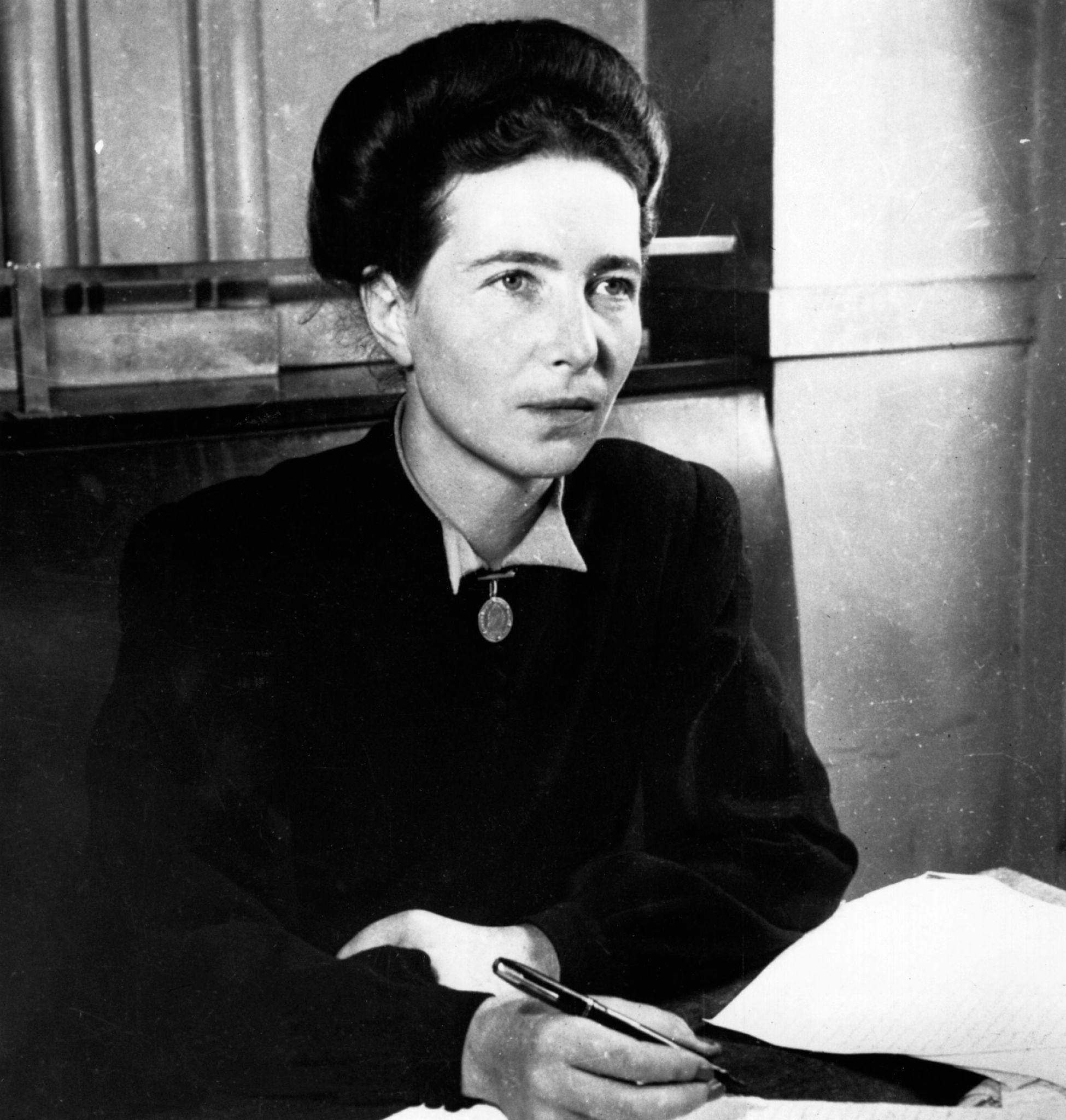
A philosopher and writer who brings freedom, reciprocity and lived experience into the same inquiry.
1908–1986 · French philosopher, novelist, and feminist thinker
Their literary world
Simone de Beauvoir examined freedom, responsibility, relationships, and the social conditions through which people understand themselves. In The Second Sex, she analyses how the lived meaning of womanhood is shaped by culture and institutions, not biology alone.
Her existential ethics asks how one can pursue one’s own freedom while recognizing the freedom of others. That question matters in love: can a relationship be genuine if one person is expected to give up their possibilities? Beauvoir brings power, equality, and agency into conversations about intimacy.
Featured reading · Flute & Forge reading companion
The Ethics of Ambiguity
A reading companion to Beauvoir’s ethical question: how do we act freely while recognizing the freedom and vulnerability of others?
Ambiguity names the condition of being both free and situated: we choose, but never outside history, need or the presence of other people. A useful reading question is not whether uncertainty can be erased, but how our choices can widen rather than deny another person’s freedom.
This is Flute & Forge commentary, not an excerpt or quotation from Beauvoir. See the book at the publisher’s source.
Explore the book at the publisherA passage
“One is not born, but rather becomes, a woman.”Le Deuxième Sexe (The Second Sex) · 1949
A way into the passage
Beauvoir argues that social and cultural forces shape the lived meaning of womanhood. The sentence challenges the idea that prescribed roles are natural or inevitable; its English wording varies by translation.
Essential works
Philosophical study · 1949
The Second Sex
A foundational study of women’s lived experience, social roles, and historical subordination.
Philosophical essay · 1947
The Ethics of Ambiguity
An exploration of existential freedom, responsibility, and our ethical relation to other people.
Novel · 1943
She Came to Stay
A novel of freedom, jealousy, and the difficulty of reconciling distinct subjective worlds.
A question worth exploring
Can love support freedom when a relationship rests on unequal expectations?
A question to carry with you
Can love recognise another person’s freedom as fully as our own?
An editorial introduction by Flute & Forge Studio.Further exploration
Stanford Encyclopedia of Philosophy
Read at the source