

Vincent van Gogh
Beauty · Love
Vincent van Gogh
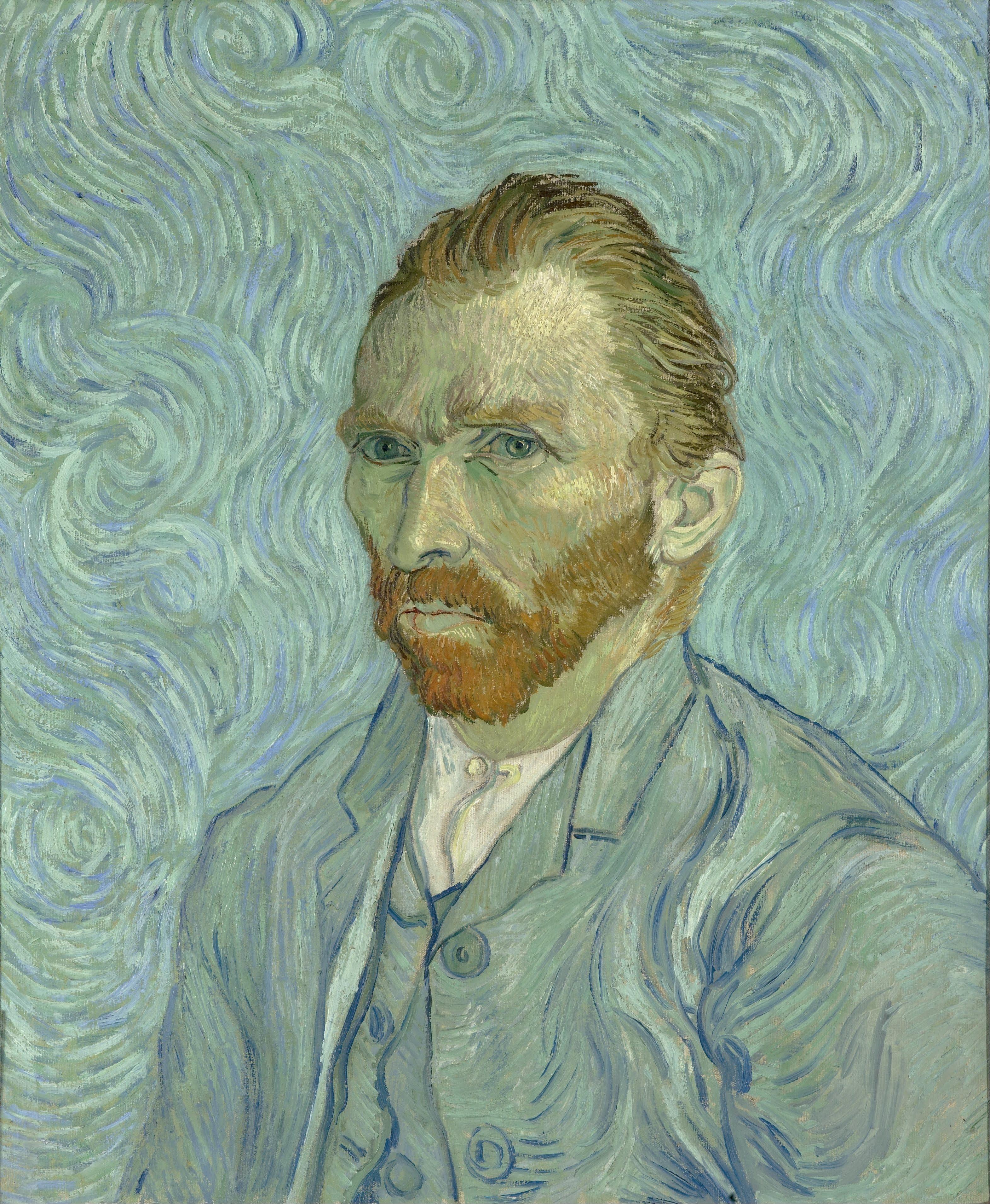
A painter whose colour and brushwork can turn an ordinary encounter into an act of attention.
1853–1890 · Dutch Post-Impressionist painter
Their literary world
Vincent van Gogh made landscapes, portraits, and ordinary objects pulse with colour and emotional intensity. Sunflowers, fields, trees, night skies, and working people became subjects through which he explored beauty and the experience of being alive.
His letters to his brother Theo show him thinking about art, affection, loneliness, ambition, and the hard work of making pictures. His legacy cannot be reduced to suffering: the letters and paintings also express curiosity, admiration, human connection, and a wish to make something meaningful.
Featured reading · Flute & Forge reading companion
Letter to Theo, 18 September 1888
A companion to Van Gogh’s letter about finding a room and shaping a place to work and live. The full correspondence lets his own words lead.
A letter about a room can also be a letter about the conditions that make work possible: light, colour, furniture, companionship and enough space to begin. Read the correspondence for its practical details as well as its hopes. Van Gogh’s own voice makes the studio both a physical place and an imagined future.
The supplied companion is editorial, not a letter translation. The Van Gogh Letters catalogue identifies this item as letter 683 (not 682).
Read letter 683 at the Van Gogh LettersA passage
“There’s nothing more genuinely artistic than to love people.”Letter to Theo van Gogh · 18 September 1888
A way into the passage
Van Gogh links art with affection for people. The sentence places creativity within human relationships and empathy rather than apart from ordinary life.
Essential works
Painting · 1889
The Starry Night
A night landscape in which movement, colour, and light turn observation into an emotionally charged vision.
Painting · 1890
Almond Blossom
Flowering branches against a luminous blue ground, often read as a tender image of renewal and new life.
Painting series · 1888–1889
Sunflowers
A familiar subject becomes an exploration of colour, vitality, and the expressive possibilities of painting.
A question worth exploring
Is beauty already in the world, or does it emerge through the way we notice and express it?
A question to carry with you
Can looking carefully be a form of affection?
An editorial introduction by Flute & Forge Studio.