Two voices. One question. Read them together, then follow the thread between them.
Choose a voice, or read both perspectives together.
The voices
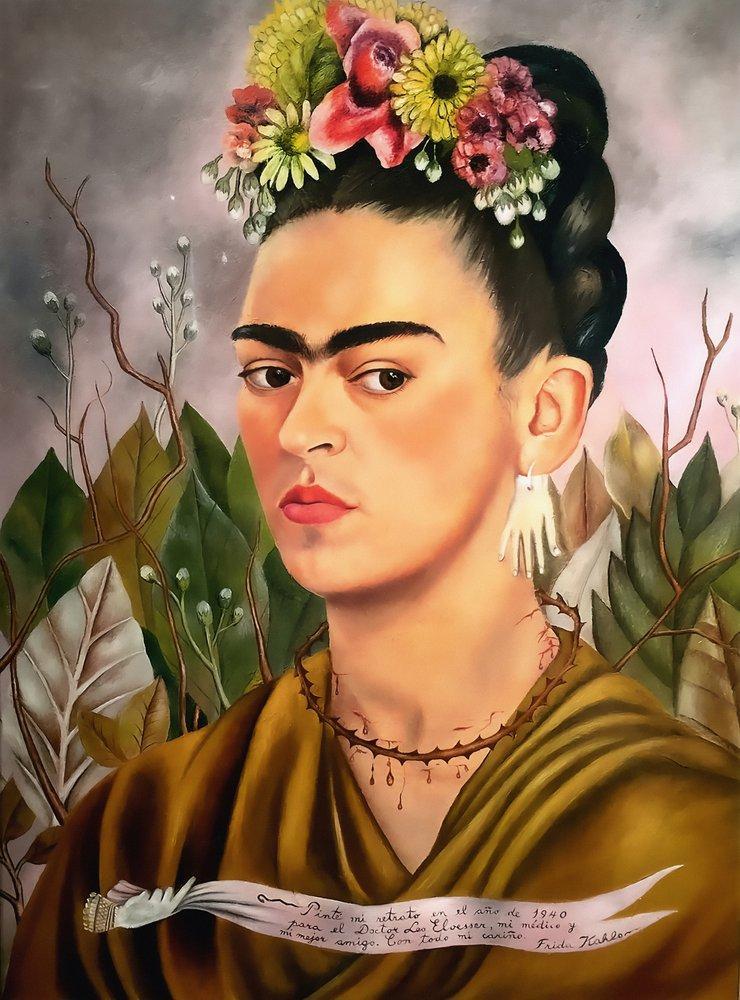
Frida Kahlo
Self-Portrait with Cropped Hair
A deliberately composed presence
Kahlo paints herself seated in a suit, with scissors and cut hair visible. Clothing and gesture make the self-portrait a deliberate construction. Our reading asks how this arrangement addresses a viewer; it does not treat painted signs as a complete explanation of the artist’s private identity.
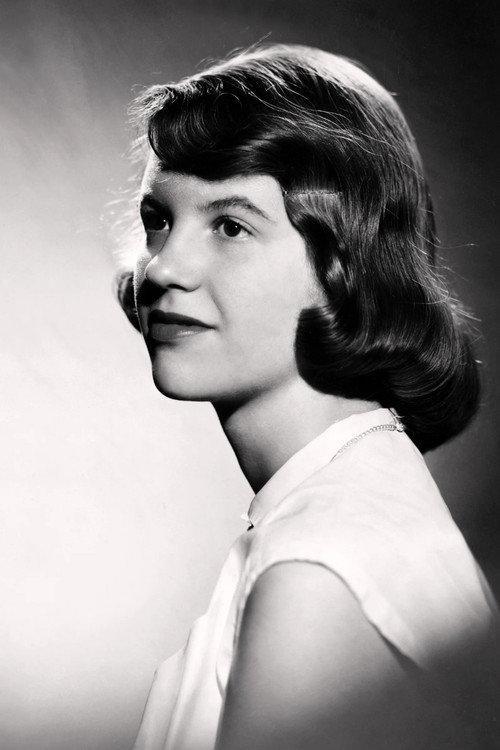
Plath’s mirror asserts its own accuracy, then speaks as a lake. A woman’s repeated looking brings time and distress into the reflection. The apparently reliable surface acquires a disturbing voice. That dramatic speaker should not be mistaken for Plath herself or accepted as an unquestionable authority.
1940 · oil on canvas · MoMA collection record and curatorial description; no image reproduced here
A thread to follow
Look at the painting through MoMA’s collection page. Attend to clothing, hair, scissors and gaze before proposing what they mean. Which observations are visible, and which are your inferences?
School-hosted poem transcription, Holland Public Schools · not a critical edition; poem text not reproduced here
A thread to follow
Read both stanzas of the linked transcription. How does the change from mirror to lake affect the speaker’s claim to truth? For exact wording and punctuation, consult a published edition.
A shared question can hold more than one reading. Follow a meeting point, a difference, or the Studio’s interpretation.
Where they meet
The first two works trouble an easy passage from visible surface to certain knowledge. Kahlo’s self-portrait makes choices in its presentation; Plath’s mirror makes a claim about what it shows. Between those acts lies a question about authority: who determines what an image means? The connection is our comparison across painting and poetry. It does not suggest a documented exchange between the artists or a single experience behind their work.
How can we take an image seriously without making it the whole truth about a person?
Where they differ
A painter can compose how a figure appears on a canvas. A poet can invent an object that tells us how it sees. These are different artistic powers, and they place the viewer or reader differently. We can look back at Kahlo’s painted gaze, while Plath’s speaking surface also directs the language of our looking. Neither encounter gives us unmediated access to the artist’s inner life.
Another way to see this
A commitment to uncertainty can also become an excuse never to recognise a clear act of self-presentation. The fact that an image is constructed does not make it empty or dishonest. Nor should a viewer’s freedom to interpret become permission to impose a diagnosis or a private story on its maker. We still need to attend to the actual choices of the work and to the limits of what we can responsibly claim.
Flute & Forge’s perspective
Perhaps an image offers a meeting, rather than a final identity.
Instead of asking a portrait to settle who someone really is, we might ask what becomes visible in this particular encounter. An image has a maker, a medium and a situation; the person looking brings expectations as well. Our proposal is to keep those relations available to thought. That would allow an image to matter deeply without giving it the final word about a person. A different work, another day or another viewer may open something the first encounter could not hold.
Another way to see this
A commitment to uncertainty can also become an excuse never to recognise a clear act of self-presentation. The fact that an image is constructed does not make it empty or dishonest. Nor should a viewer’s freedom to interpret become permission to impose a diagnosis or a private story on its maker. We still need to attend to the actual choices of the work and to the limits of what we can responsibly claim.
The question that remains
How can we take an image seriously without making it the whole truth about a person?
A thematic comparison, not a claim of historical influence or a psychological finding.
What do you notice?
Your reading can remain a question. Choose a possibility, write a thought, or continue directly to the Studio’s perspective.
Your words stay in this tab for this visit. They are not submitted or included in a shared link.
A new voice at the table
What if appearance could hide a changing life?
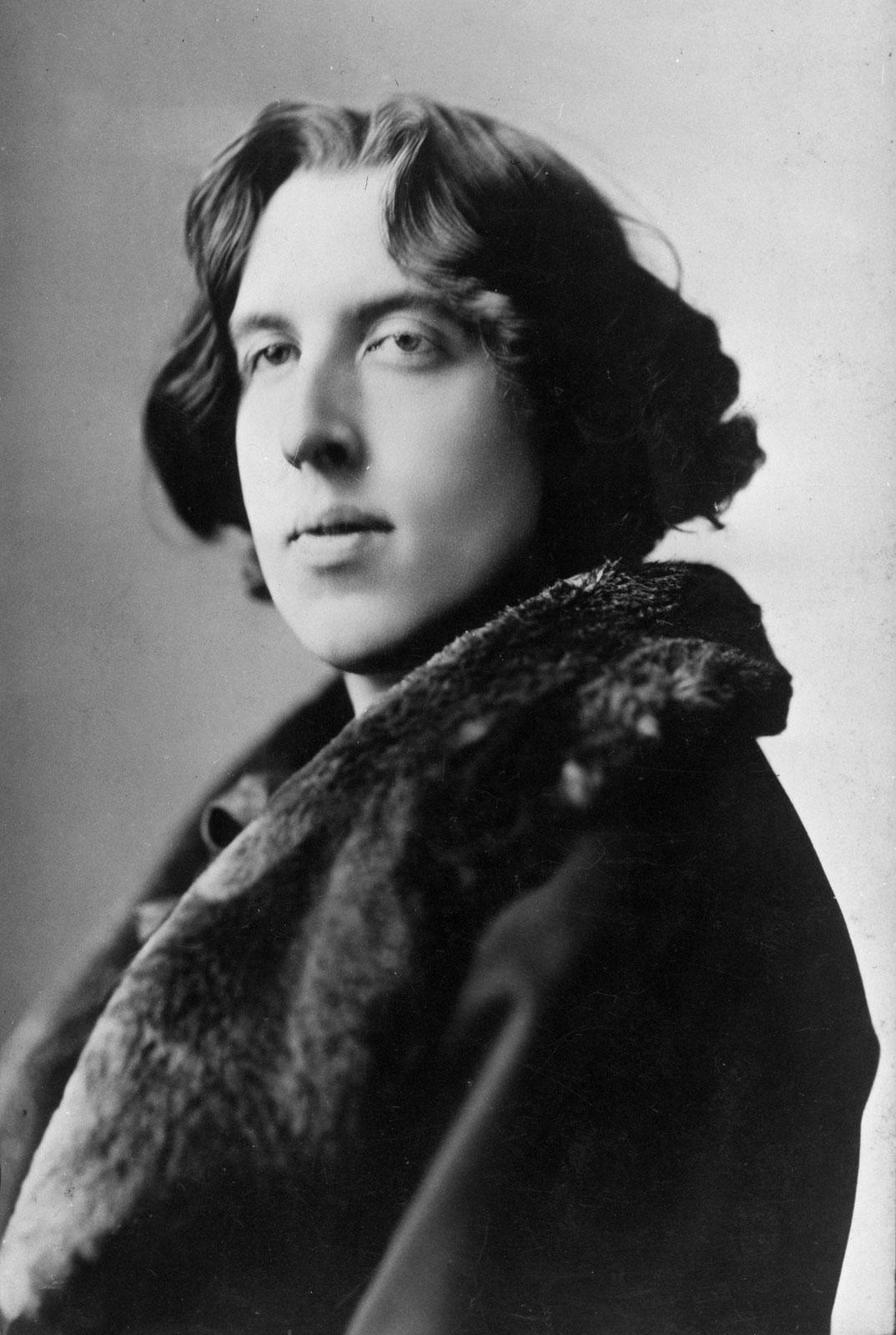
Wilde’s portrait introduces a split between what the world sees and what the image is made to carry.
Oscar Wilde
The Picture of Dorian Gray
1891 book edition · chapters II, VII and XX · Project Gutenberg full text
In Wilde’s novel, the portrait changes while Dorian’s outward youth remains. The separation makes appearance a poor guide to what a life is becoming. This is a fictional device whose unsettling force depends on the impossible division it creates, rather than a literal account of how art reveals character.
With the novel beside the first two works, the question includes what we want an image to protect us from seeing. The revised reading does not turn a face into a moral report. It asks instead how the wish for a stable, pleasing appearance can shape our response to change. Perhaps a responsible encounter with images needs both imagination and restraint: enough imagination to notice what a surface makes possible, and enough restraint to leave a living person larger than our interpretation.
What do we ask an image to reveal, and what do we hope it will let us avoid?
Keep the question open
Follow these voices into their profiles and selected readings. A different work may complicate the connection again.